
Double cup maze cup

Double cup maze cup

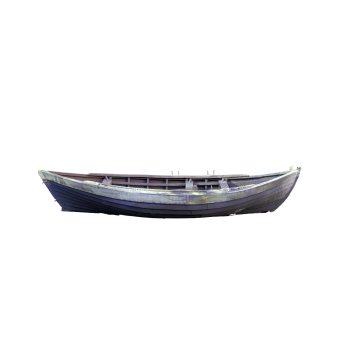
The Double Cup (Mazer) is a beautifully crafted 16th century German artifact collected by the Cleveland Museum of Art, dating back to approximately 1530. This piece is made of maple wood material and is decorated with gold and silver plated ornaments on the surface, with the second part measuring 17.4 centimeters in height. It consists of two spherical cups made of mazer wood (a multi jointed wood believed by ancient people to neutralize poison poured into it). The Cleveland Museum of Art, through J H. Wade Fund purchased and collected this artwork with the serial number 1950.83. a.
Great Fortune "gourd shaped plaque

Great Fortune "gourd shaped plaque

The magnificent royal decorative lapis lazuli "Da Ji" double gourd shaped plaque from the Qianlong period.
Qing Dynasty cloisonn é cloisonn é enamel lotus pedestal
Qing Dynasty cloisonn é cloisonn é enamel lotus pedestal

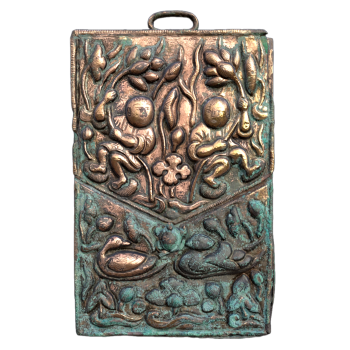
The Qing Dynasty cloisonn é cloisonn é enamel lotus pedestal is made of copper wire cut into various patterned contours, then filled with enamel glazes of different colors. After firing, polishing and other processes, it finally forms a brightly colored and exquisitely patterned artwork. These paintings often depict Buddhist scriptures, images of saints, or religious symbols, which not only have high artistic value, but also carry profound religious and cultural significance.
The container of Tibetan sutra in the period of Koryo

The container of Tibetan sutra in the period of Koryo

This relic is a box of sutras known as the "container of Tibetan sutras", from the Korean Koryo period (918-1392) around 1100 AD. It is made of gold-plated copper with embossed decorations, and the overall dimensions are 10.2 x 6.5 x 1.5cm. This sutra box was once used to preserve miniature Buddhist sacred texts. By hammering the reverse side, the front and back of the box are engraved with relief designs depicting a peaceful pond boy holding a huge lotus in his hand and a pair of mandarin ducks swimming. These playing boys may represent the newly born soul in the Pure Land. Collected at the Cleveland Museum of Art.
Carved Bronze Oval Ware

Carved Bronze Oval Ware

The engraved bronze oval vessel is a sphere-shaped vessel decorated with geometric patterns. The production period is the European (period) Bronze Age, made of bronze material, size height: 13.7 meters, diameter: 7.5cm, is now collected in the French National Archaeological Museum.
Ancient Greek clay pot

Ancient Greek clay pot

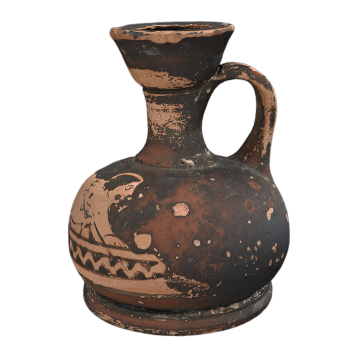
The ancient Greek clay pot was an ancient Greek ceramic vessel, often used to store and transport small quantities of liquids, such as oils and perfumes. The artifact you mentioned was found on the island of Cyprus during the European Iron Age in the 7th century BC. Production period 7th century BC, Europe (period) Iron Age. It is found on the island of Cyprus (origin). Dimensions: height 22cm, diameter 12.3cm, currently collected in the Louvre Museum in France.
Ancient Greek spherical wine bottle

Ancient Greek spherical wine bottle

The ancient Greek spherical wine bottle was a small clay bottle with a main face resembling a baby. The period is the 4th century BC, the classical period of ancient Greece. The production site is in Attica, ancient Greece, and the discovery site is in Laurion (mine). The height is 6.8 centimeters, the width of the bottle body is 5.5 centimeters, the caliber is 3 centimeters, and the bottom diameter is 4.9 centimeters. It is now collected in the National Museum of Archaeology in France.
Carved bronze axe blade

Carved bronze axe blade

This cultural relic is an axe blade, with a curved blade section and a quadruped animal engraved on each side of the blade surface. The artifact dates back to the early Iron Age in 1000 BC and was discovered in Koban Cemetery, North Ossetia. It is made of copper alloy and measures 17.5 centimeters in height and 5.5 centimeters in width. It is currently housed in the National Museum of Archaeology in France.
Onion ball diameter clay cup

Onion ball diameter clay cup

The "Onion Ball Diameter Pottery Cup" is a glass made of clay, shaped like the bulb of an onion and decorated with slight grooves. The production period was in the 9th century BC, during the late period of European bronze ware. The discovery was made in Brison Saint Innocent, Gr é sine station, and Lac du Bourget in the Savoy department of France. The dimensions are height: 21 centimeters, width: 13.7 centimeters, depth: 4.5 centimeters. It is currently housed in the National Museum of Archaeology in France.
Saint Germain kettle

Saint Germain kettle

This kettle comes from Saint Germain en Laye and can be traced back to the early Middle Ages, which is the high school century. This kettle is now housed in the National Archaeological Museum of France. The collection of this museum includes various technological and artistic works since the emergence of humans in France. The size of this' kettle 'is 8.7 centimeters high and 15.6 centimeters wide.
Saint Germain single ear wine jug

Saint Germain single ear wine jug

The Saint Germain single eared wine jug was discovered in the archaeological site of Saint Germain en Laye, and this cup can be traced back to the 6th century AD. The name 'Saint Germain' comes from the Catholic saint Paris, who was born in Outan and served as the Bishop of Paris from 555 to 576, during which time he built the Abbey of Saint Germain de Prey. The Saint Germain Cup is currently housed in the National Museum of Archaeology in France.
Saint Germain high footed round cup

Saint Germain high footed round cup

The Saint Germain double eared cup was discovered in the archaeological site of Saint Germain en Laye and can be traced back to the 6th century AD. The name 'Saint Germain' comes from the Catholic saint Paris, who was born in Outan and served as the Bishop of Paris from 555 to 576, during which time he built the Abbey of Saint Germain de Prey. The Saint Germain Cup is currently housed in the National Museum of Archaeology in France.
Saint Germain Double Ear Cup

Saint Germain Double Ear Cup

The Saint Germain double eared cup was discovered in the archaeological site of Saint Germain en Laye and can be traced back to the 6th century AD. The name 'Saint Germain' comes from the Catholic saint Paris, who was born in Outan and served as the Bishop of Paris from 555 to 576, during which time he built the Abbey of Saint Germain de Prey. The Saint Germain Cup is currently housed in the National Museum of Archaeology in France.
Queen Angongde's belt

Queen Angongde's belt

The Belt of Queen Arnonde "is a precious artifact discovered in 1959 at Saint Denis Cathedral. It is a belt made of goat skin with rich decorations. The belt was found in Tomb 49, which belonged to Queen Arnonde of Francia. Aregade was the third wife of Clovis I and passed away between 580 and 590 AD at the age of 70 to 80. The items found in her tomb include a brown red silk robe decorated with gold embroidery, a pair of round slender pins inlaid with garnet, and a pair of shoes made of leather.
Carved bronze bracelet

Carved bronze bracelet

This carved bronze bracelet comes from the R é allon region of the High Alps department in France. Archaeological relics were discovered there. This bracelet can be traced back to the post Bronze Age from the 10th century BC to the 9th century BC. This bracelet is now housed in the National Museum of Archaeology in France.
The Staff of Command of Louis Nicolas Davout

The Staff of Command of Louis Nicolas Davout

This scepter belongs to Louis Nicolas Davout. Louis Nicolas Davout (May 10, 1770- June 1, 1823), also known as Davout, was a French military commander and imperial marshal who served during the French Revolutionary War and the Napoleonic Wars. His war talent, as well as his reputation as a strict disciplined individual, earned him the nickname 'Iron Marshal' (Le Mar é chal de fer). He was listed as one of Napoleon's most outstanding commanders. His loyalty and obedience to Napoleon were absolute.
Olas Sebastiani's baton

Olas Sebastiani's baton

Olas Sebastiani (November 11, 1771- July 20, 1851) was a French general, diplomat, and politician who served as Minister of the Navy, Minister of Foreign Affairs, and Minister of State during the July Monarchy. He joined the French Revolutionary Army at a young age, rose to prominence in its ranks, and later became a supporter of Napoleon Bonaparte. He was once an envoy sent by the French consulate to the East, mainly responsible for formulating plans to reconquer Ottoman Egypt, and later served as the ambassador to the Ottoman Empire during the empire. The Marshal's Staff of Orlas Sebastiani is a 19th-century French artifact.
Ferdinand Foch's Staff of Command

Ferdinand Foch's Staff of Command

This scepter belongs to Ferdinand Foch. Ferdinand Foch (October 2, 1851- March 20, 1929) was a French Marshal and a member of the French Academy. He performed outstandingly as the Supreme Allied Commander on the Western Front during World War I. He stopped Germany's attack and launched a counterattack to win the war. In November 1918, Marshal Foch accepted the German ceasefire and attended the ceasefire agreement of November 11, 1918. This scepter was awarded to Foch by French President Raymond Poincar é on August 23, 1918.
Marshal Gabriel Morito's baton

Marshal Gabriel Morito's baton

This baton belongs to Gabriel Morito. Gabriel Molito (March 7, 1770- July 28, 1849) was a French Marshal. He joined the French Revolutionary Army during the outbreak of the French Revolution, initially as a captain of a militia. In 1793, he was appointed as a brigade commander and participated in the battles of Kaiserslautern and Wiesenburg under General Horch. In 1799, he was sent to Switzerland to fight against the Austrian Russian coalition led by Alexander Suvorov under the command of General Andrei Massena. In 1801, he was promoted to the rank of division general.
French Marshal's baton

French Marshal's baton

The "Louis Georges Erasme, Marquis de Contades' Marshal's Rod and Sleeve" is a historical artifact that is currently housed in the Military Museum in Paris, France. The production date of this Marshal's baton is approximately 1758. One end is adorned with the national emblem of France, featuring a relief of the Marquess's Crown 1, while the other end is adorned with the coat of arms of the Contades family
The baton of Marquis Cassagnet

The baton of Marquis Cassagnet

The baton of the Marquis of Cassagnet (B â ton de command du Marquis de Cassagnet) is a historical artifact currently housed in the Military Museum in Paris, France. The production date of this baton is approximately 1679. Its main body is a wooden cylinder, once covered in deep blue velvet, but now only the base remains. The circumference of the cylinder is embedded with partially gold-plated silver nails, and the nail heads take on the shape of lilies. The decorations at both ends are spiral shaped and made of partially gold-plated silver.
Ancient Egyptian Fish Shaped Palette

Ancient Egyptian Fish Shaped Palette

It is an ancient Egyptian artifact that can be traced back to the Nagada II period from 3500 BC to 3300 BC. Discovered in El Amrah (located on the west coast from Asgard to Thebes) and currently housed in the Louvre Museum in Paris, France. This color palette is made of sandstone and features carving techniques. It measures 16 centimeters in length, 8.6 centimeters in width, and 1.1 centimeters in thickness. Unique design, often associated with ancient Egyptian makeup culture, as it was used to grind and mix pigments for body painting. It may also have ceremonial or symbolic significance, closely linked to the religious and cultural customs of ancient Egypt
An Egyptian eagle-headed sphinx hidden in the British Museum
An Egyptian eagle-headed sphinx hidden in the British Museum

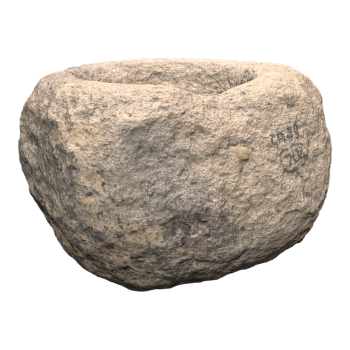
This is a falcon head sphinx also known as the eagle-headed lion. It is a statue of a lion with a human face on its upper body and a falcon on its head. In ancient Egyptian religious beliefs, this image may have represented different deities or symbolism. The Sphinx usually symbolizes power and authority, while the eagle's head may be associated with the sky, the universe, or other mysterious aspects. Found in the temple of Ramses II in Abu Simbel, Egypt (Nubia), this is one of the pair. It is now in the British Museum in London.
Stone oil lamp base unearthed at Broch of Gurness
Stone oil lamp base unearthed at Broch of Gurness

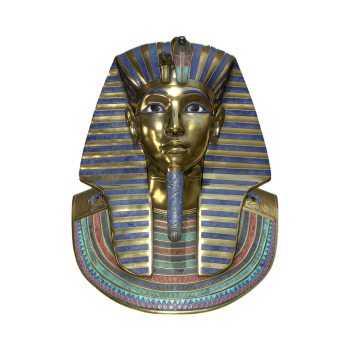
Broch of Gurness is an Iron Age village in the western Orkney Islands, Scotland, about 2,000 years old. This roughly chiseled lamp, once filled with oil, could once provide light from a slow-burning wick. Found in an Iron Age settlement Gurness of Broch.